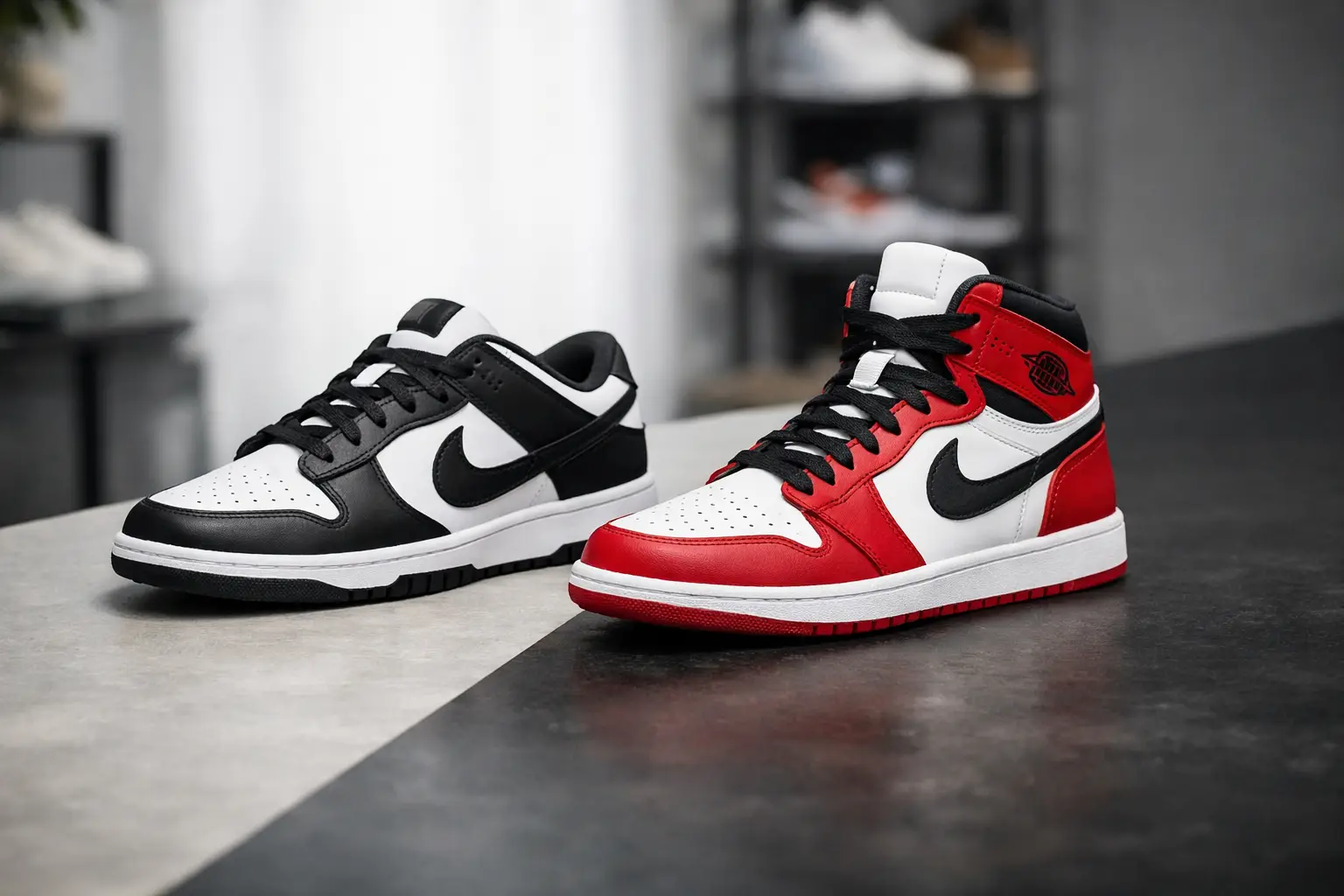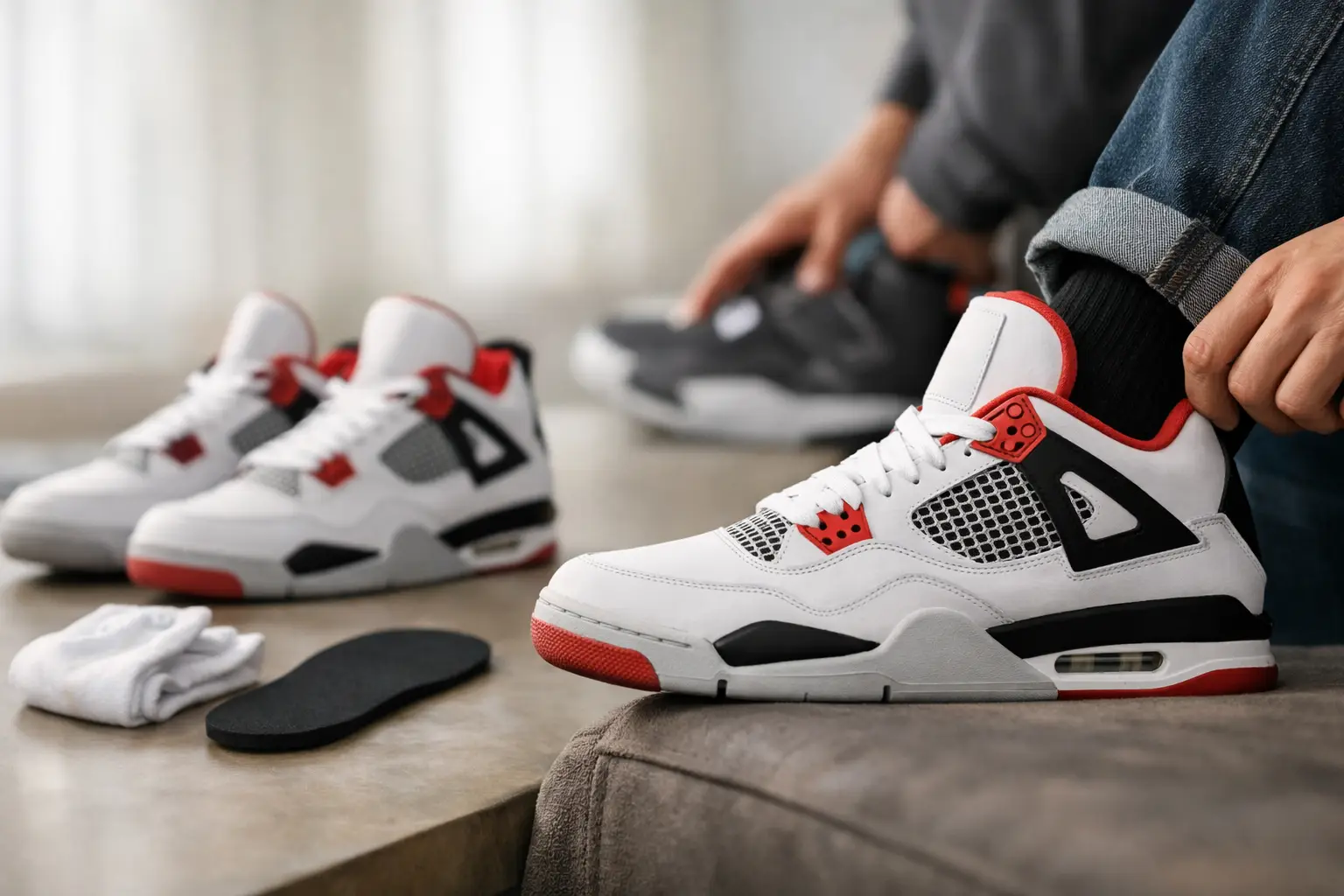
The Air Jordan 4 is one of the most recognizable sneakers in the rotation, but its fit can surprise people who are used to softer, roomier retro Jordans. This Jordan 4 fit guide breaks down what to expect before you lace up a pair - from the famously structured upper to the extra attention wider feet may need.
The short version: most people can buy the Jordan 4 in their usual Nike or Air Jordan size. Still, the shoe is not automatically a comfortable true-to-size fit for everyone. Its plastic wings, padded collar, firm leather panels, and relatively narrow forefoot create a more locked-in feel than an Air Jordan 1 or Jordan 3. If you prefer breathing room around your toes, sizing up half a size can make a real difference.
Does the Jordan 4 Fit True to Size?
For average and narrow feet, the Air Jordan 4 generally fits true to size. Your regular size should deliver a secure heel, a close midfoot, and enough length at the toe for everyday wear. That said, “true to size” does not mean loose. Jordan 4s are built to feel supportive and contained, especially straight out of the box.
The pressure point is usually the forefoot and midfoot rather than the heel. The lateral plastic wing system gives the shoe its iconic shape, but it also limits how much the upper can stretch outward. People with wider feet often feel that structure immediately, particularly in pairs made with stiff full-grain leather or suede.
If your usual sneakers already fit close, do not expect the Jordan 4 to feel forgiving on day one. The right size should have roughly a thumb’s width between your longest toe and the end of the shoe, without your toes pressing against the front when walking downhill or bending your foot.
Jordan 4 Fit Guide by Foot Type
Narrow or average-width feet
Go true to size. A standard-width foot is the ideal match for the Jordan 4’s shape, and going up half a size may leave too much length in the toe box. That can lead to heel movement, especially after the shoe softens with wear.
You can use the standard lacing setup for a classic, locked-in feel. The tongue is heavily padded, so even a snug fit should not feel sharp across the top of the foot once the shoe has had a few wears.
Wide feet
Consider going up half a size. This is the safest call if you consistently size up in Nike basketball silhouettes, feel pressure across the ball of your foot, or wear thicker socks. The added room helps reduce pinching from the forefoot overlays without turning the Jordan 4 into a noticeably long shoe.
There is one trade-off: half-sizing up can create a little heel slip for some wearers. If that happens, start with thinner socks or adjust the laces through the top eyelets before assuming you need to return the pair. A slightly roomier Jordan 4 usually feels better than a pair that crushes your forefoot all day.
High insteps
A high instep can make the Jordan 4 feel tighter than expected, even when the length is correct. The shoe’s padded tongue and lace wing system sit firmly over the top of the foot. Try loosening the lower and middle laces before tightening the upper section. This creates more volume where you need it while keeping the heel secure.
If you regularly struggle with pressure on the top of your foot, half a size up is worth considering. This is especially true for leather Jordan 4s, which hold their shape more aggressively than softer mesh-based sneakers.
Between sizes
When you are between sizes, let width decide. Choose the smaller size if your foot is narrow and you want a close, performance-inspired fit. Choose the larger size if comfort, daily walking, or thicker socks are part of the plan.
For collectors who wear their pairs only occasionally, true to size may be fine even if the shoe starts out snug. For someone building a Jordan 4 into a weekly rotation, the more comfortable option usually wins.
How Jordan 4s Compare With Other Jordans
The Jordan 4 fits differently from several other popular retro models. Knowing those differences is often more useful than relying on the number printed on the box.
Compared with the Air Jordan 1, the Jordan 4 feels shorter in usable space even when both pairs are technically the same size. Jordan 1s have a more flexible leather upper and a simpler construction through the forefoot. If your Jordan 1s fit perfectly but already feel slightly close, a half-size-up Jordan 4 may suit you better.
Against the Jordan 3, the Jordan 4 usually feels more restrictive in the midfoot. The Jordan 3 has a broader, more natural-feeling forefoot shape and less hardware around the laces. Many people wear both true to size, but the Jordan 4 will feel more structured.
The Jordan 11 is another useful comparison. Both models have a substantial padded collar and a firm presence on foot, but Jordan 11 patent leather can feel tighter around the toe box. If you go up half a size in Jordan 11s for comfort, you may want to do the same with Jordan 4s.
Do Jordan 4s Break In?
Yes, but only to a point. Jordan 4s do soften with wear, particularly pairs with leather uppers. The collar padding settles, the insole compresses slightly, and the materials around the forefoot become less rigid. What will not change dramatically is the underlying width of the shoe.
Do not buy a pair that causes numbness, serious toe pressure, or sharp pain with the expectation that it will fully stretch out. A Jordan 4 can become more comfortable, but it will not transform from narrow to wide. Suede and nubuck versions may feel a touch more accommodating over time, while heavily coated leather can stay stiff longer.
For the first few wears, keep things practical. Use thinner socks, lace the shoe a little looser through the midfoot, and avoid making a brand-new pair your choice for an all-day festival, a long city walk, or a travel day. Two or three shorter wears are usually enough to tell whether the size is right.
Lacing Changes the Feel More Than You Think
The Jordan 4’s distinctive lace wings offer more control than a basic eyelet row. For a roomier casual fit, loosen the laces across the lower half of the shoe and secure the top just enough to prevent heel lift. This reduces pressure without losing the clean Jordan 4 shape.
For a more locked-in fit, run the laces through the upper wing positions and tighten gradually from the toe upward. Avoid yanking the laces hard across the tongue. The shoe can feel overly compressed at the instep, and the visual result is often less clean than a slightly relaxed lace job.
If you wear orthotics or swap in a thicker insole, factor that into your sizing decision. The Jordan 4 already has limited vertical volume, so an added insole can make a true-to-size pair feel much tighter. Half a size up is often the better move in that situation.
Comfort, Styling, and What to Wear With Them
The Jordan 4 is a lifestyle sneaker first for most people now, even though its basketball DNA is obvious. It looks best when the proportions of the outfit let the shoe keep its shape. Relaxed denim that sits just above the collar, straight-leg cargos, and heavyweight sweatpants all work naturally. Extremely slim pants can bunch awkwardly around the padded collar, while oversized wide-leg pants may hide the details that make a Jordan 4 special.
For daily comfort, socks matter. A medium-weight crew sock is the sweet spot for most true-to-size wearers. Wider-footed wearers who sized up can comfortably use thicker socks, especially in colder months. If you chose your regular size and the shoe feels close, a thinner athletic sock can buy meaningful space without changing the fit elsewhere.
Colorway can also affect how often you reach for a pair. Neutral releases such as Black Cat, Military Black, or classic white-based versions work easily with a broad rotation. Bolder pairs, from Lightning to vivid collaboration colorways, make more sense when the rest of the outfit stays controlled. The Jordan 4 has enough visual energy on its own.
The Best Jordan 4 Size for You
Choose true to size if your feet are narrow to average width and you like a close, supportive sneaker. Go up half a size if you have wide feet, a high instep, wear orthotics, or simply value comfort over the tightest possible fit. Avoid sizing down unless you know you have a notably narrow foot, because there is very little upside to a Jordan 4 that feels cramped.
A well-fitting pair should feel secure, not restrictive. Give the shoe a few short wears, adjust the lacing before judging it, and let the materials settle. When the size is right, the Jordan 4 earns its place far beyond the shelf - it is one of those silhouettes that makes even a simple outfit feel considered.