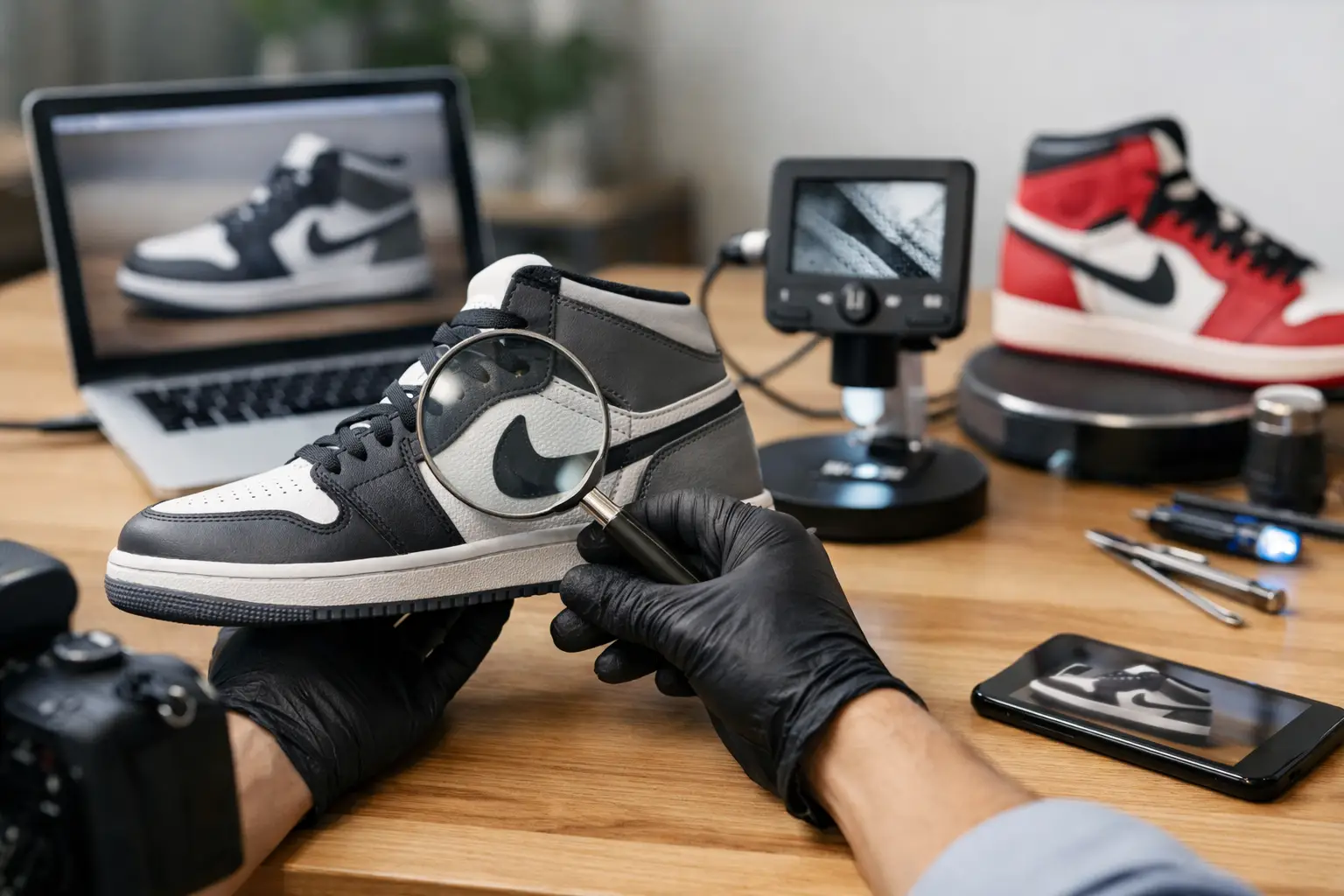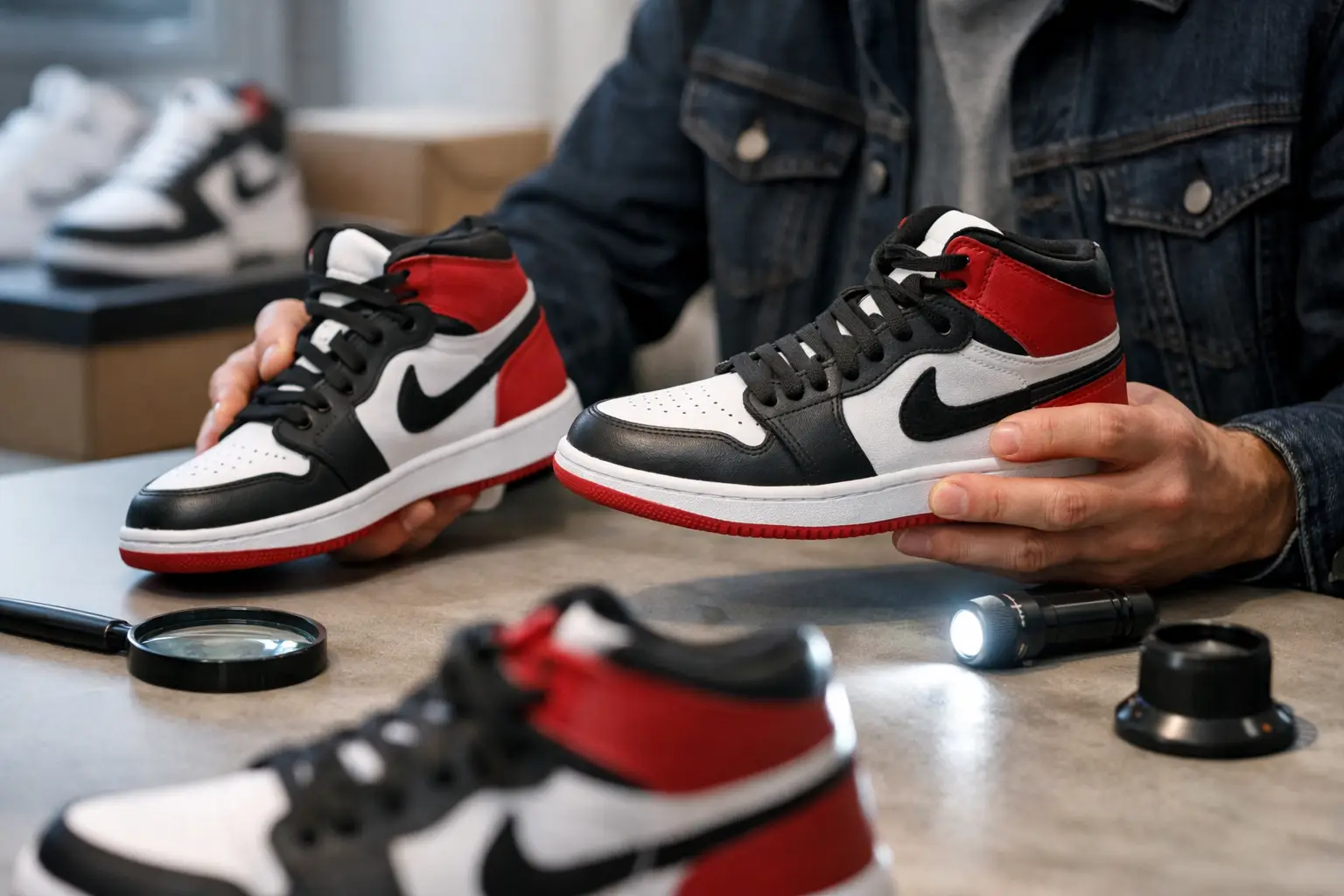
A pair looks right in photos, the price is just low enough to feel like a win, and the seller says they need payment today. That is usually the moment buyers stop asking the hard questions. If you want to know how to spot fake sneakers, start there - not with the box, not with the logo, but with the pressure around the deal.
Counterfeits have gotten better. The obvious fakes with terrible shape, wrong branding, and plastic materials still exist, but many bad pairs now copy the easy details well enough to fool casual buyers. That means authentication is less about one magic giveaway and more about reading the full picture correctly.
How to spot fake sneakers before you buy
The safest time to catch a fake is before money changes hands. Once a seller starts dodging basic verification requests, the risk goes up fast.
Start with the listing itself. Clean photos are good, but perfect-looking photos can also hide problems if they are borrowed, filtered, or cropped too tightly. You want to see the pair from multiple angles, including lateral side, medial side, toe box, heel, outsole, insole, size tag, and box label. If a seller only shows glamour shots, ask for direct, current photos with natural lighting.
Then look at the price in context. Not every good deal is fake, but highly demanded pairs rarely trade far below market without a reason. If the gap between market value and asking price is big, treat that gap as a warning, not a bonus. Serious sellers know what inventory is worth.
Seller behavior matters just as much as the product. Fast replies are helpful. Evasive replies are not. If someone avoids sending tag photos, refuses to show the inside stitching, or pushes off-platform payment, assume the transaction is unsafe. In resale, trust is built through transparency.
Check the shape, not just the branding
Most buyers look for logo mistakes first. Experienced buyers look at shape.
Fake sneakers often get the broad identity of a shoe right while missing the proportions that define the real pair. The toe box may sit too high, the heel may be too bulky, or the collar may have the wrong curve. On some models, the swoosh placement, panel spacing, or sole height gives the pair away before the label does.
This is where familiarity with the exact release matters. A Jordan 1, Yeezy 350, Dunk Low, and New Balance 2002R all fail differently when they are fake. Even within the same model line, one colorway may have material changes or factory variations that another does not. If you are buying a high-value pair, compare it against known authentic examples of that exact release, not just the same silhouette.
There is a trade-off here. Legit pairs can vary slightly based on factory, production run, and size. So shape alone should not be treated as final proof. But when the form looks off and other details also raise questions, the risk gets harder to ignore.
Materials and build quality tell the real story
Counterfeiters usually win on first impression and lose on feel. Materials are one of the strongest indicators once you know what the real pair should use.
Leather that should feel soft and structured may come across as stiff or overly glossy. Suede may look flat instead of textured. Mesh may be too coarse, too thin, or inconsistent across the shoe. Foam can also give away a fake pair because the density and rebound feel wrong under pressure.
Stitching is another useful check, but only when viewed realistically. A single loose thread does not make a sneaker fake. Major luxury and sportswear brands still ship retail pairs with minor factory imperfections. What you are looking for is pattern-level inconsistency: uneven stitch spacing, crooked lines, panel misalignment, excess glue, or sloppy finishing repeated across the pair.
The outsole and midsole deserve attention too. Color tone is often slightly off on counterfeit pairs, especially on aged midsoles, translucent soles, and cream or sail finishes. Mold definition can also look softer. If traction patterns appear shallow or edges look blurred, the tooling may not match authentic production.
Labels, size tags, and box details matter - but they are not enough
A lot of buyers overvalue the box label because it feels official. Counterfeiters know that, which is why labels have improved.
Yes, you should inspect the size tag, SKU, production date range, country of manufacture, font spacing, and QR or UPC details where relevant. You should also check that the box label matches the pair inside. But matching numbers do not guarantee authenticity. Fake pairs often copy authentic SKU information directly from retail listings.
What these details are best at doing is exposing lazy counterfeits. If the SKU is wrong, the font is off, the tag placement is strange, or the box color is inconsistent with the release, that is useful. But a convincing fake can still pass basic label checks.
Think of labels as supporting evidence, not the whole case.
Smell, weight, and packaging can help
These checks are not definitive, but they can strengthen your read.
A strong chemical smell can signal counterfeit production materials or fresh adhesive. Weight can also be revealing if a pair feels unusually light or heavy versus what the model typically feels like. Packaging details such as thin paper, low-quality printing, missing inserts, or the wrong extra laces may point to a fake.
Still, this is where buyers get into trouble by assuming too much. Boxes get damaged, tissue paper gets replaced, and accessories go missing in resale. A missing hangtag is not the same as a fake shoe. Use these signs to build context, not to make snap judgments.
Photos to request if you are not holding the pair
If you are buying remotely, the quality of your photo request often determines the quality of your decision.
Ask for close-up photos of the size tag, insoles, heel embroidery or heel tab, outsole, toe box profile, and any known high-risk details on that specific model. Ask for both shoes side by side and from above. Symmetry issues become easier to spot that way.
You should also request a timestamped photo. That helps confirm the seller actually has the pair and is not reusing images from another listing. If the seller resists basic proof-of-possession requests, move on.
Video can help when photos are too controlled. A short handheld clip often reveals shape, material movement, and reflection better than heavily edited still images.
Where buyers get fooled most often
The most common mistake is buying the story instead of the pair. Sellers know how to frame urgency. They mention a quick sale, a canceled order, an ex-gift, or a need for cash today. Sometimes the story is true. Often, it is there to stop scrutiny.
The second mistake is relying on one signal. Maybe the box looks right. Maybe the seller has receipts. Maybe the stitching seems clean. None of that settles the question by itself. Good authentication is cumulative.
The third mistake is trusting platforms or payment methods that do not control the transaction. If the marketplace never physically verifies the product, the burden stays on the buyer. That is where counterfeits keep circulating.
The most reliable way to reduce risk
If you regularly buy high-demand pairs, learning how to spot fake sneakers is useful. But there is a difference between being informed and being fully protected.
Manual checks help you filter obvious risk. They do not replace expert authentication, especially on pairs with strong replica volume or subtle version differences. For collectors, resellers, and inventory buyers, the real edge is buying through a process that verifies the product before it reaches you.
That is why managed resale models matter. On https://solepoint.eu/, every item is verified before shipment, with protected payments, tracked delivery, and a refund guarantee if the item does not match the listing. That structure removes the weakest part of sneaker resale: blind trust between strangers.
The counterfeit market keeps getting sharper, which means buyers need to get more disciplined. Slow the deal down, check the full picture, and do not mistake confidence from a seller for proof. The best pairs are worth waiting for, and the right transaction should never need a leap of faith.