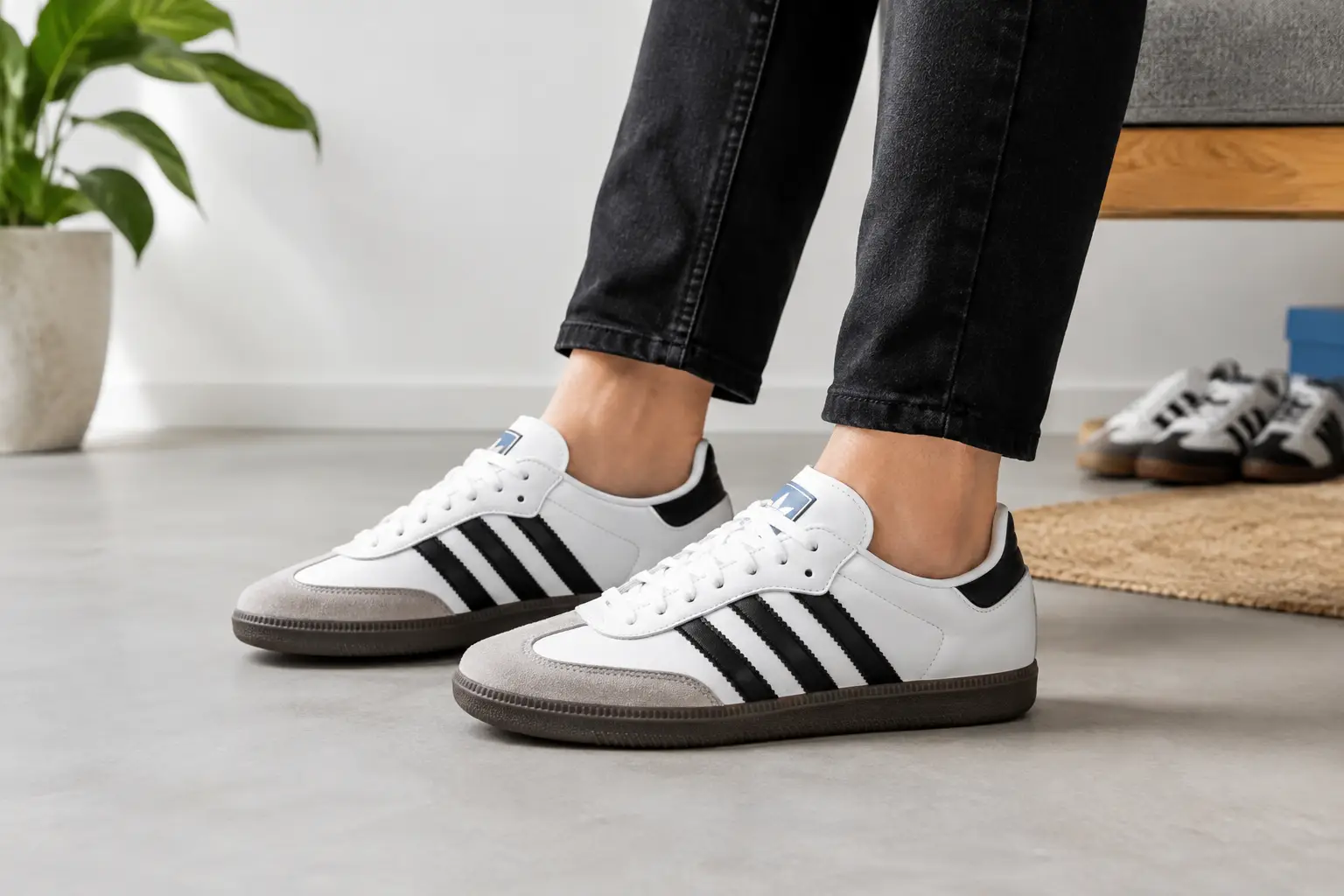
The adidas Samba looks low-key on foot, but its fit can be surprisingly specific. So, are Sambas true to size? For most people, yes: your usual adidas size is the best starting point. The catch is the shoe's narrow, low-profile shape. If you have wide feet, wear thick socks, or hate a close fit around the forefoot, going up a half size can make a real difference.
That slim silhouette is part of the appeal. A Samba is meant to sit closer to the foot than a cushioned runner or a chunky skate shoe. Get the sizing right and it feels sharp, easy to style, and ready for daily wear. Get it wrong and the leather can press at the sides long before the shoe has had time to soften.
Are Sambas true to size for most people?
For average-width feet, adidas Sambas generally fit true to size in length. Order the size you normally wear in adidas Originals, especially if you already know your fit in the Gazelle, Spezial, or Stan Smith. The toe box is not unusually short, and most wearers will have enough room at the front in their standard size.
Width is the bigger question. Sambas have a fairly narrow midfoot and a tapered toe area compared with modern lifestyle sneakers. The leather upper also starts structured, particularly on classic pairs with smooth leather and suede overlays. It will relax with wear, but it will not transform into a wide shoe.
If your usual size already feels slightly snug in narrow sneakers, choose a half size up. That is also the safer move if you plan to wear your Sambas for long days of walking, traveling, or standing. A little extra length is usually easier to manage than pressure across the ball of your foot.
Why the Samba fit feels different
The Samba was born as an indoor football shoe, and its shape still carries that history. The low sole, close heel, and lean upper create a more connected feel than the padded, foam-heavy sneakers that dominate current rotation. It is one reason the model works so well with relaxed denim, track pants, tailored trousers, and the slimmer styling that has returned to streetwear.
That heritage also explains the firm first impression. A Samba does not have the plush step-in comfort of an adidas Campus 00s or a modern running-inspired sneaker. Its gum sole is flexible once broken in, but the upper needs a few wears to mold around your foot. Expect a fitted feel, not a soft slipper feel, straight from the box.
The standard Samba OG, which is the version most people mean when they talk about Sambas, sets the baseline here. Colorways, materials, and collaborations can feel marginally different, but the underlying last is broadly consistent.
Length: usually accurate
The easiest way to judge length is the thumb rule. With the shoe laced and your heel seated at the back, you want roughly a thumb's width between your longest toe and the front of the shoe. Your toe should not touch the leather when walking downhill or flexing forward.
If that space is there in your normal size, do not size up simply because the shoe feels firm at the sides on day one. The leather will give a little. Sizing up too far can create heel slip, which is especially noticeable in such a low-cut silhouette.
Width: where some buyers should size up
Wide-footed wearers are the group most likely to call Sambas small. The shoe can pinch around the little toe or at the widest point of the forefoot, especially during the first few wears. If that sounds familiar with other slim adidas classics, go up a half size rather than trying to force your true size.
People with very wide feet may find that even a half size up does not entirely change the fit. More length creates room, but it does not alter the shape of the shoe. In that case, a roomier adidas model may offer better all-day comfort, while the Samba can still work as a shorter-wear styling sneaker.
Instep and heel: secure, not roomy
Sambas tend to hold the heel well. Their low-cut collar is lightly padded and the lacing system lets you fine-tune the midfoot without making the shoe look bulky. For narrow feet, this usually means a clean, locked-in fit at true to size.
If you have a high instep, loosen the lower eyelets slightly before deciding the shoe is too small. Overtightening the laces can make the tongue and upper press down across the top of the foot. A more relaxed lace setup often solves that issue without the need to change sizes.
Samba sizing compared with other adidas classics
If you already own adidas shoes, comparing silhouettes is more useful than guessing from a generic size chart.
The Samba generally feels narrower and more fitted than the Stan Smith. A Stan Smith has a more spacious, rounded feel through the forefoot, while a Samba sits closer to the foot and has less interior volume. If your Stan Smiths fit perfectly with no extra room, you may prefer a half size up in Sambas if your feet run wide.
Against the Gazelle, the difference depends partly on materials. Suede Gazelles often feel easier to break in because suede is more forgiving, while the Samba's leather construction can feel firmer at first. In length, most people can wear the same size in both. The Samba typically feels a touch more structured and secure.
Compared with the Handball Spezial, the Samba has a slightly sleeker, more tapered character. Many sneaker fans wear the same size across both, but a wide foot is more likely to notice the Samba's close fit. And compared with Campus 00s, Sambas are dramatically less roomy. Do not expect the same padded, oversized comfort.
How to choose your Samba size before buying
Start with the pair of adidas Originals you wear most often. If it fits well and your foot is average or narrow, choose that same size in the Samba. If you are between sizes, have a wide forefoot, or want room for thicker socks, take the larger half size.
Try on both shoes indoors with the socks you actually plan to wear. Thin crew socks or standard athletic socks are the natural match for Sambas. Heavy winter socks can make a true-to-size pair feel restrictive, while very thin socks may leave a half-size-up pair feeling looser at the heel.
Walk on a hard surface for a few minutes rather than judging from a seated try-on. Pay attention to three areas: toe contact at the front, pressure on the outside edge of your forefoot, and heel lift. Mild firmness through the leather is normal. Sharp pressure, numbness, or toes hitting the end are signs that the size is not right.
Breaking in Sambas without wrecking your feet
A new pair often needs a short adjustment period. Wear them around the house first, then take them out for a few shorter walks before making them your all-day festival, city-trip, or commute shoe. The leather will gradually conform around the forefoot and the sole will flex more naturally.
Avoid the old trick of soaking leather sneakers or aggressively heating them. That can affect the upper, glue, and shape of the shoe. A better approach is simple: wear normal socks, lace them comfortably, and let the materials ease in through regular use.
If there is one localized hot spot but the length is correct, a shoe stretcher used carefully by a professional can help. But do not buy a too-small pair expecting a break-in period to solve every issue. Leather can soften; it cannot create meaningful extra length.
The fit choice that looks best on foot
Sambas look best when they fit close but not cramped. The toe should stay sleek rather than folding heavily, the heel should remain planted, and the upper should not visibly strain across the sides. That balance matters because the model's appeal is all proportion: a slim sole, a clean T-toe, and enough structure to anchor everything from baggy pants to cropped trousers.
For most rotations, true to size delivers that intended look. Go a half size up if comfort at the forefoot is your priority, especially if your feet are wide. A Samba should feel snug in a purposeful way, not like a shoe you are counting down the hours to take off.