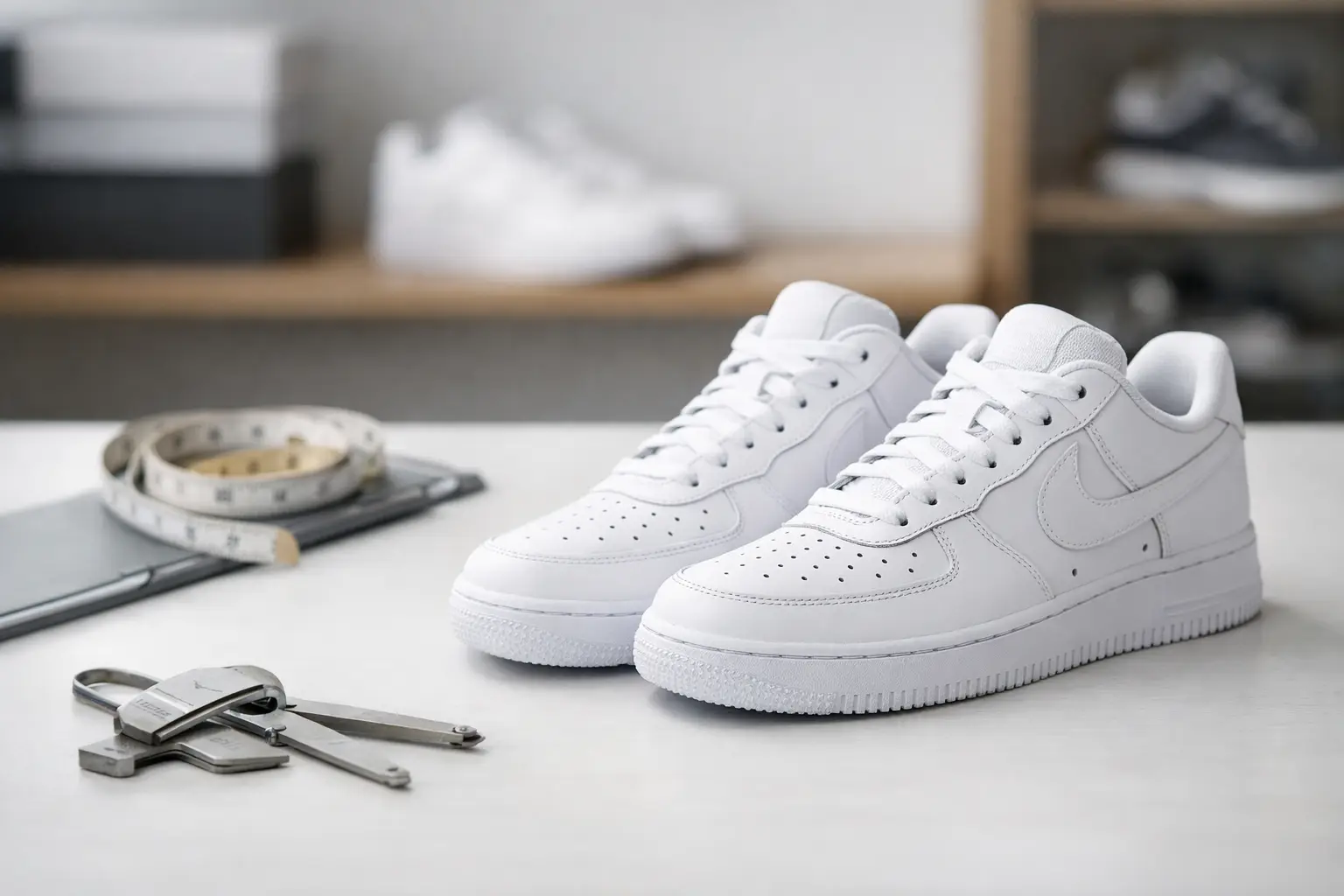
The Nike Air Force 1 has one of the most recognizable shapes in sneaker history, and that shape affects fit. This Air Force 1 sizing guide breaks down whether to go true to size or half a size down, what changes between low, mid, and high versions, and how to avoid turning a clean pickup into a shoe that sits unworn.
Do Air Force 1s run big?
For most people, Air Force 1s run slightly large. The toe box is generous, the leather upper has some give after wear, and the shoe has a broader, roomier platform than many modern Nike models. If your foot is narrow or average width and you prefer a close, secure fit, going down half a size is often the move.
That said, true to size is still the safer choice for wide feet, high insteps, or anyone who wears thicker socks. The difference is not dramatic enough to make the wrong size unwearable, but it can change the look and feel. An AF1 that is too long tends to crease more heavily across the forefoot and can feel loose at the heel. One that is too short will put pressure on the front of the toe box, especially during a full day on foot.
The simplest rule is this: choose half a size down for a fitted, everyday AF1 feel; stay true to size if you need more width or want extra room for socks.
Air Force 1 sizing guide by foot type
Your usual Nike size is a useful starting point, but your foot shape matters more than a label on the box. Air Force 1s are built on a substantial cupsole and have more interior volume than slim, running-inspired sneakers.
Narrow feet
Narrow-footed wearers are the strongest candidates for going down half a size. At true to size, the heel can lift slightly and the front can feel overly spacious, particularly once the leather softens. Half a size down usually keeps the shoe looking crisp while still leaving enough toe room.
If you like a very locked-in fit, try the half-size-down pair with the socks you wear most often. Do not size down a full size unless you have worn AF1s before and know you prefer an exceptionally snug fit. The length can become an issue faster than the width.
Average-width feet
Average-width feet can go either way. Go half a size down if you wear thin or regular socks and prefer sneakers that hold your foot firmly. Stay true to size if you like a relaxed fit, spend long days walking, or know that your feet swell slightly after hours of wear.
This is where personal styling plays a role too. A clean white-on-white AF1 looks best when it sits neatly on the foot, not when the toe box folds and collapses. A closer fit helps preserve that sharp, low-profile stance.
Wide feet and high insteps
Wide-footed shoppers should generally take their true size. The AF1 is forgiving across the forefoot compared with a Dunk or Air Jordan 1, but the leather overlays can feel firm before break-in. Going down half a size may create pressure along the pinky toe or over the top of the foot.
If your feet are especially wide, true to size is usually enough. Going up half a size should be a last resort because extra length can cause heel slip. Before making that jump, try loosening the lower laces and wearing the shoe at home for a short period. The upper often relaxes where it needs to.
Low, mid, and high: does the fit change?
The Air Force 1 Low is the reference point. It has the most versatile fit, a padded collar, and no ankle strap to change the lockdown. Most sizing advice applies directly to the low.
Air Force 1 Mids can feel more secure around the ankle because of the strap, but the actual length and forefoot fit are close to the low. Keep the strap comfortably snug rather than cranking it tight. The shoe should support your ankle without creating pressure at the top of the collar.
Air Force 1 Highs have the same roomy foundation but can feel tighter at first around the ankle and upper foot. If you have a high instep, true to size is the smarter starting point. The collar padding and strap add structure, so a half-size-down high can feel more restrictive than a low in the same size.
How Air Force 1 sizing compares to other Nike sneakers
If you already know your size in other Nike classics, use these comparisons to make a more confident call.
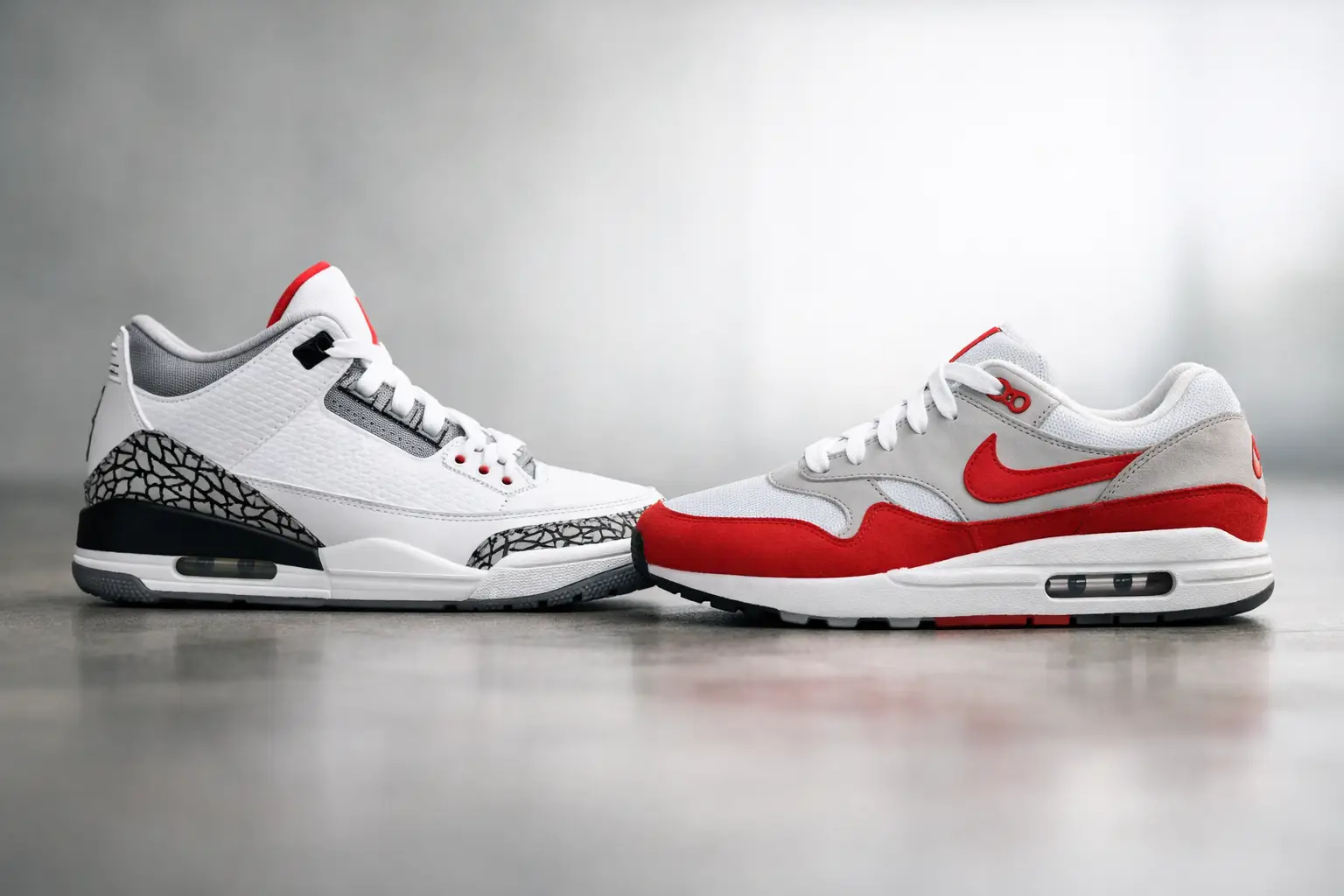
Air Force 1s typically fit bigger than Nike Dunks. Many people wear their standard size in Dunks but go down half a size in AF1s. Dunks have a more compact feel through the midfoot, while AF1s offer more room up front.
Compared with Air Jordan 1s, Air Force 1s are usually wider and roomier. If you wear an Air Jordan 1 true to size and it feels perfect, an AF1 half a size down may deliver a similarly secure fit. Wide-footed Jordan 1 wearers may still prefer their normal size in both.
Compared with Nike running shoes, the AF1 can feel much more spacious. Performance models are often designed to hug the midfoot, while the AF1 was built as a basketball shoe in 1982 and became a lifestyle staple because of its substantial, easy-wearing shape. Do not assume your snug running-shoe size is automatically right here.
Women’s, men’s, and grade school sizing
Most adult Air Force 1 releases use unisex sizing, even when a colorway is marketed through women’s sizing. The standard conversion is 1.5 sizes: a women’s US 8.5 is generally equivalent to a men’s US 7. Keep that conversion in mind when comparing listings, especially for sought-after women’s-exclusive colorways.
The fit itself does not suddenly become narrower just because the box uses women’s sizing. Focus on the stated US, UK, and EU size, then compare it with a pair you already own. Nike’s size labels can be helpful, but the physical fit should be the final decision-maker.
Grade school AF1s are made for smaller feet and do not always feel identical to adult pairs. Materials, cushioning, and internal volume can vary. If you are able to wear both grade school and adult sizing, do not assume the conversion will produce the same experience. Adult pairs usually feel more substantial, while grade school versions can feel slightly stiffer or shallower.
What to expect during break-in
Fresh Air Force 1s can feel firmer than their relaxed reputation suggests. The leather is structured, the outsole is thick, and the heel area may need a few wears to soften. A correctly sized pair should feel secure from day one, not painful. Mild stiffness is normal; pinching, numbness, or toe contact is not.
Wear them indoors for an hour or two with your usual socks before committing to a full day. The forefoot leather will crease and adapt over time, but the length will not change. If your longest toe is touching the front while standing, do not count on break-in to solve it.
Lacing makes a real difference. Leave the lower eyelets a little looser if you have a high instep, then tighten gradually toward the top for heel stability. For a classic streetwear look, many people keep the laces relaxed, but a loose lace setup can exaggerate heel slip in a pair that is already slightly oversized.
A quick way to choose your size
Start with the sneaker size that feels best in a Nike Dunk, Air Jordan 1, or another leather lifestyle shoe. From there, take half a size down if your feet are narrow to average and you want a close fit. Stay true to size if your feet are wide, your instep is high, or you wear thicker socks.
If you are between sizes, choose based on width rather than length. A little extra toe space is easier to manage with lacing and socks than a forefoot that feels compressed. And if you are buying a special colorway, a premium leather release, or a collab you plan to keep in rotation, getting the fit right matters as much as getting the color right.
The best Air Force 1 size is the one that lets the shoe move with you without looking or feeling loose. Give the leather a few wears, keep the laces intentional, and let that iconic shape do what it has done for decades: make almost any outfit feel more finished.